• Skip to main content
  • Skip to footer

Reggae In Seattle

Reggae In Seattle

  • Events
  • TV EPISODES
  • Artist Interviews
  • Blog
  • Contact Us

Live

10 NOV 1978 – “BABYLON BY BUS” RELEASED

November 10, 2022 By Roland Lundberg

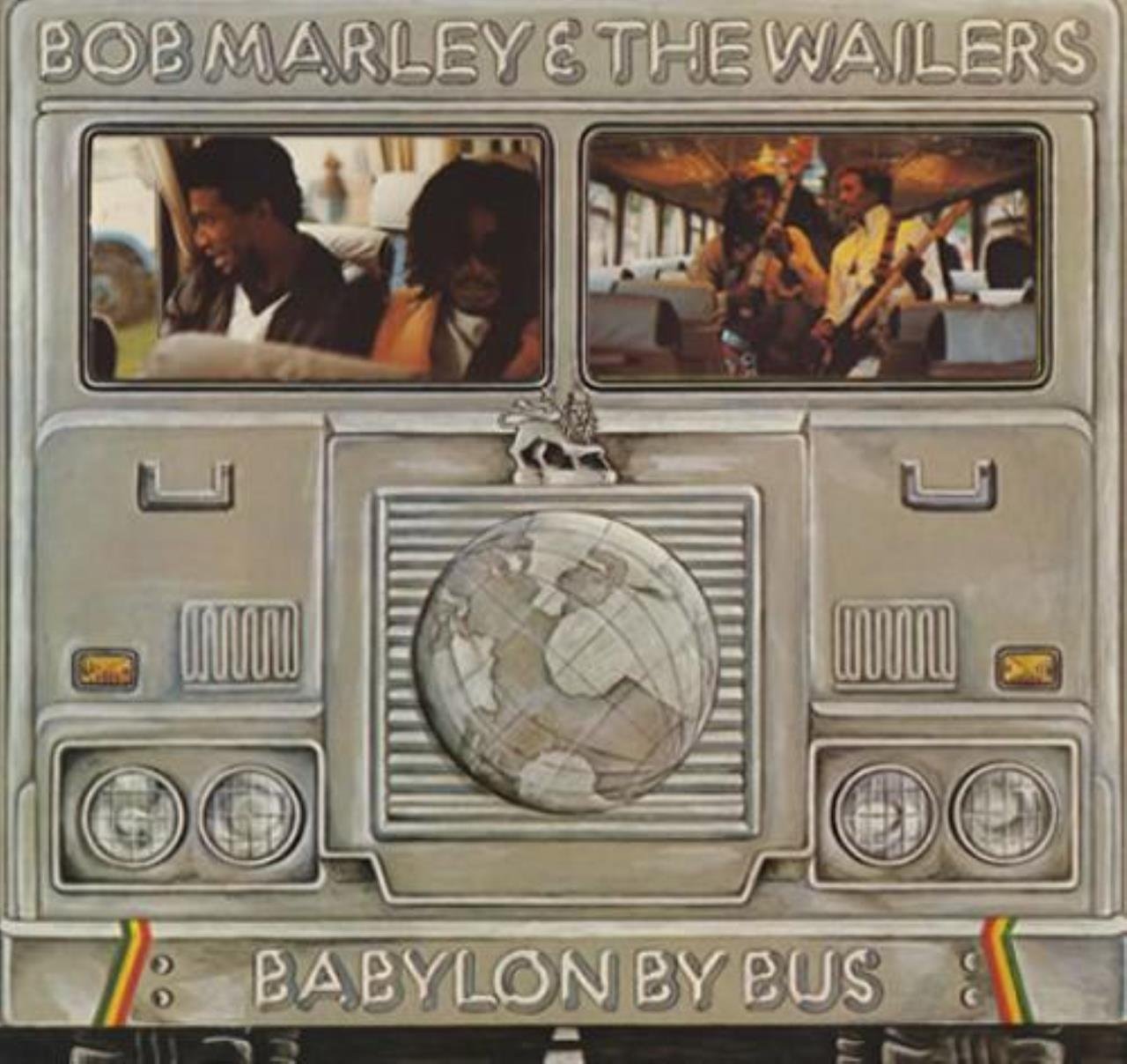
Image result for Babylon by Bus

BABYLON BY BUS is a live album released by Bob Marley and the Wailers in 1978. The tracks on this album are considered, with two exceptions, to be from the Pavillon de Paris concerts over 3 nights, 25–27 June 1978, during the Kaya Tour, though there are discrepancies in the track listing.

Like the 1973 album Catch a Fire, the first release had something of a novelty cover. The windows of the bus on the front cover were cut out, revealing part of the inner sleeve. As this was a double album, the listener had a choice of four different scenes to view through the windows.

“Heathen”, “Lively Up Yourself” and “Concrete Jungle” were not as common as the rest of the album on the tour, with 2 of the 3 more than likely played on any given night, but not always, and were only ever all played on the same night twice: at the Pinecrest Country Club in Shelton, Connecticut, 14 June and the Music Inn in Lenox, Massachusetts 18 June, which was one of the longest shows ever played by the band with 22 songs, but none were played at the Paris concerts. “Rebel Music”, “Positive Vibration”, “Jamming”, “Exodus”, “War / No More Trouble” and “Punky Reggae Party” were nearly always played at some point of each concert, though were mixed up some times with other songs like “Get Up, Stand Up”, usually played with “Punky Reggae Party”, which isn’t on this album though was also played most nights. The song “Is This Love” was also not common on this tour, though was played in Paris. The track “Kinky Reggae” wasn’t played on the Kaya tour and in fact hadn’t been played since the 1976 Rastaman Vibration tour, so it’s unclear which concert this version is from.

Side One
1. “Positive Vibration”
2. “Punky Reggae Party”
3. “Exodus”

Side Two
4. “Stir It Up”
5. “Rat Race”
6. “Concrete Jungle”
7. “Kinky Reggae”

Side Three
8. “Lively Up Yourself”
9. “Rebel Music (3 O’Clock Roadblock)”
10. “War / No More Trouble”

Side Four
11. “Is This Love”
12. “The Heathen”
13. “Jamming”


Filed Under: Album, Anniversary, Artist, Bob Marley, Concert, Live Performance, Reggae Tagged With: Babylon By Bus, Bob Marley, Live, Reggae

17-18 JULY, 1975: BMW “LIVE” RECORDED

July 17, 2021 By Roland Lundberg

Image result for Bob Marley & The Wailers – Live

“All the way from Trenchtown, Jamaica – Bob Marley and the Wailers.” So began one of the transcendent albums of the modern pop era. Live! was recorded on the 17 and 18 July, 1975 at two beyond-sold-out shows at the Lyceum Ballroom in London, and released in the UK on 5 December the same year. Reports of these shows at the time were couched in terms of bemused wonderment. What they all agreed on was Marley’s messianic charisma, the infectious brilliance of the music and the musicians, and the overwhelming sense of occasion. Indeed, such was the iconic significance of Marley’s performance, that it reminded the reviewer from Sounds of Bob Dylan’s show at the Albert Hall in 1966. Marley’s current tour would, he said, “finally make reggae respectable”. With the help of this album, it certainly took reggae to a new level of visibility and acclaim, although “respectable” was never really Marley’s thing.

Marley and the Wailers were touring to promote the Natty Dread album, released the year before. Starting in Miami, Florida on 5 June, the band had played much the same set-list of songs at venues across the US. But although the reviews had been favorable, Marley had yet to make his big breakthrough. A critic at the band’s show at the Wollman Skating Rink in New York spoke for many when he noted that, “Seeing the Wailers live made one wonder once again why Jamaican reggae is so slow to catch a fire in the States”.

The London shows were at the start of a brief UK leg of the tour which also took in Birmingham and Manchester. The Lyceum was a West End theater converted into a 2,100-capacity Mecca Ballroom best known for its big band concerts and Miss World contests and notable for having a retractable roof which could be opened during concerts in the summer. It became a rock venue in the 1960s and 1970s when bands including Queen, Led Zeppelin and the Who played there. The two Marley shows had been feverishly awaited. Word of mouth had spread from his previous tours of the UK and while he had long been a hero among the Afro-Caribbean community, Marley was now a firm favorite among the post-hippie and college campus crowd. The racial mix of the audience at the Lyceum was thus, unusually for a rock venue, split 50-50. The police were out in force, lined up outside the venue, and a spirit of revolution hung heavy in the air, along with the sweet-smelling smoke for which Kingston, Jamaica was already famous.

The line-up of the Wailers which arrived in London comprised the longstanding rhythm section of Aston Barrett (bass) and Carlton Barrett (drums) together with Al Anderson (lead guitar), Tyrone Downie (keyboards), Alvin Patterson (percussion) and a depleted I-Threes vocal section of Rita Marley and Marcia Griffiths (Judy Mowatt missed the London shows).

The show was recorded on the Rolling Stones Mobile Studio, a 16-track, state-of-the-art facility which had been used in the same year to record Led Zeppelin’s Physical Graffiti and Bad Company’s Run With The Pack. Parked in the road outside the venue during the concert, the Mobile faithfully captured the glorious spirit of the occasion along with all sorts of minor imperfections in the actual performance which were not tidied up or otherwise “airbrushed” retrospectively. There were the ragged backing harmonies of ‘Trenchtown Rock’; the slight, but persistent speeding up of the tempo towards the end of ‘Lively Up Yourself’; and the microphone feedback, hovering momentarily, during the first verse of ‘No Woman, No Cry’.

But far from impairing the listening experience, such flaws lent an earthy realism to the recording which only added to the irresistible majesty of the album as a whole. After the succinct words of introduction by the Wailers’ road manager Tony Garrett, the show and album kicked off with ‘Trenchtown Rock’, during which the sound of the crowd quickly became part of the fabric of the performance itself. As the band powered through Side 1 of the album with ‘Burnin’ And Lootin’’, ‘Them Belly Full (But We Hungry)’ and ‘Lively Up Yourself’ there was a communal, feelgood spirit that burst out from the grooves of the disc. ‘I Shot The Sheriff’ was insanely stronger than the Wailers’ version on Burnin’, never mind Eric Clapton’s international hit of the previous year. And the grand finale of ‘Get Up, Stand Up’ found the audience contributing to an expression of musical solidarity rarely heard in any concert hall, let alone captured for posterity.

The most perfectly realized song of all from this album, perhaps even from all of Marley’s albums, was ‘No Woman, No Cry’, which opened Side Two of the original vinyl pressing. There was something uniquely soulful and evocative about the live version of this particular song on this particular night. As the extended organ intro got underway, you could hear voices from the crowd chanting the chorus before Marley had even started to sing himself. This had the curious effect of making it sound as if the audience were actually sitting with the band around one of the campfires in the government yard in Trenchtown. With the roof of the venue now open in a vain attempt to relieve the sweltering heat of the auditorium, this idea was not as fanciful as it might have seemed. The noise and bustle and affection of the crowd was evident throughout the seven-minutes that the song lasted, as Marley sang of the bonds of friendship and love that will ultimately deliver a community from hardship. The closing line of “Everything’s gonna be all right,” was a mantra of optimism and deliverance that crossed all divides, a piece of music which celebrated the resilience of the human spirit no matter what obstacles a cruel world might throw in its way.

The Live! version of ‘No Woman, No Cry’ immediately became the definitive recording of the song. It also became Marley’s first hit, reaching No.22 in the UK chart when it was released as a single in 1975. It would later reach No.8 in the UK when it was re-released after Marley’s death in 1981, and while it never charted in the US, the song would later be ranked at No.37 in Rolling Stone’s Greatest Songs of All Time.

Live! was the perfect distillation of Marley’s core repertoire up to this point collected together and presented at the perfect time. The imperfections in the performance only added to the record’s appeal – paradoxically, making it even more perfect. To this day, Live! has remained, both spiritually and musically, as close to nirvana as a recorded music experience can get.


Filed Under: Album, Anniversary, Artist, Culture, Jamaica, Reggae, Roots Tagged With: Album, Anniversary, Bob Marley, Live

Footer

Stay Up To Date! Sign Up!

  • Events
  • TV EPISODES
  • Artist Interviews
  • Blog
  • Contact Us

Copyright © 2026 · Reggae In Seattle